
By using our website, you agree to the use of cookies as described in our Cookie Policy
What to Do When Your Garage Door Slams Shut
Most homeowners think a garage door is just about convenience. Open, close, park the car. But when that door comes crashing down without warning, you're dealing with more than a mechanical hiccup. You're staring at a safety hazard that could've crushed a kid, a pet, or your skull. And if you ignore what caused it, you're gambling with the next time it happens.
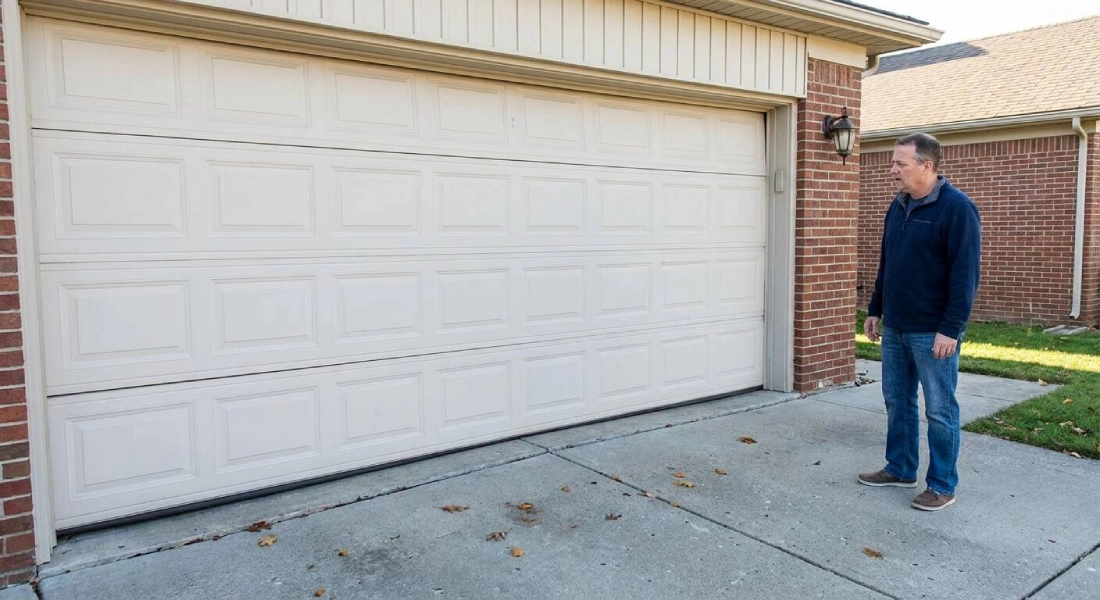
So here's what matters. A door that slams isn't broken by accident. Something failed — a spring snapped, a cable gave out, or the opener lost its mind. Every one of those scenarios leaves clues. And every fix starts with knowing what you're looking at, not just what you heard when it hit the ground.
Don't Touch Anything Until You Think
The second that door hits the floor, your instinct might be to yank it back open or start poking around. Resist that urge. Garage doors weigh hundreds of pounds, and if the system holding it up just failed, you don't want your hands anywhere near the next collapse.
Step back. Check if anyone's hurt. Look for visible damage without getting close enough to trigger another drop. If the door's sitting crooked or a spring is dangling, you already know enough to stop and call someone who deals with this for a living.
Springs Snap and Doors Drop
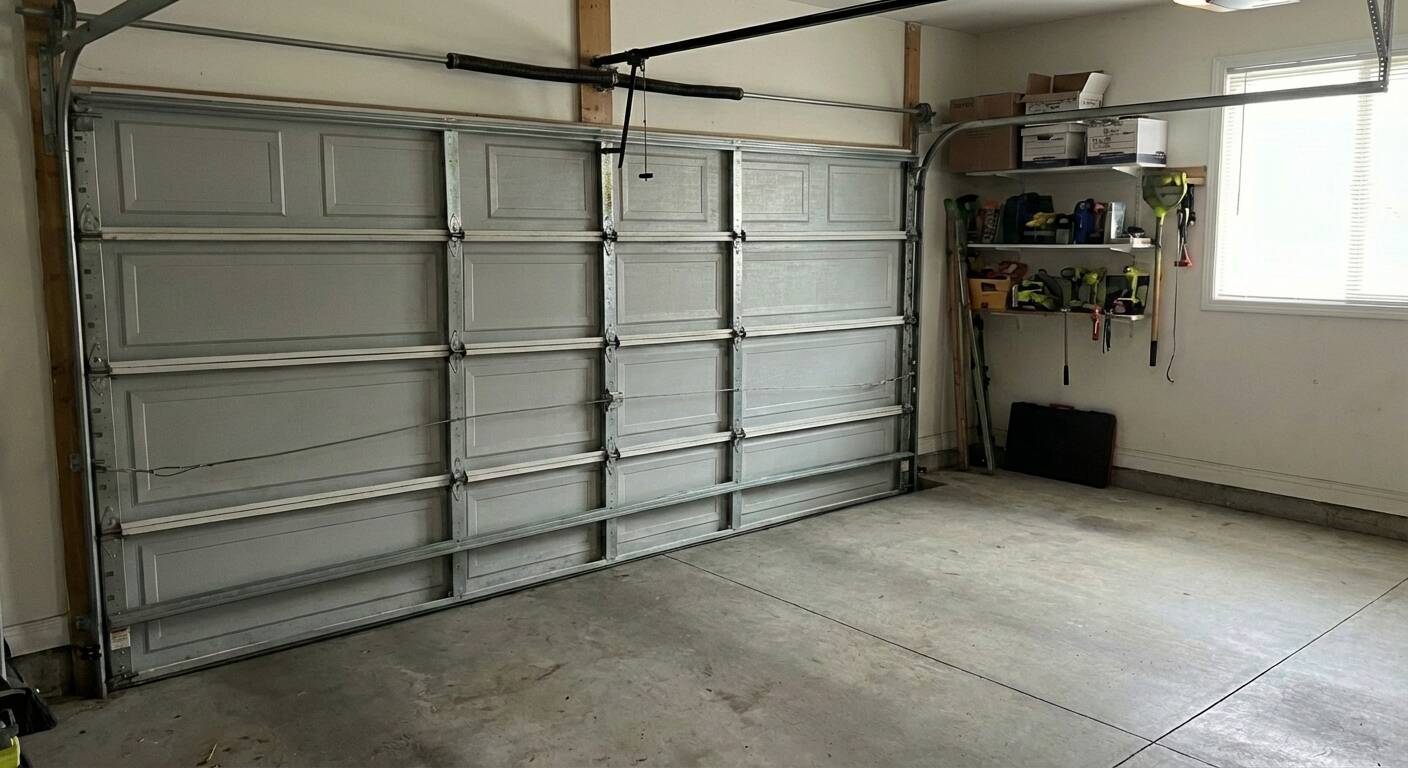
The most common culprit behind a slamming door is a busted spring. These coiled metal lifelines do all the heavy lifting — literally. When one breaks, the door loses its counterbalance and gravity takes over. Fast.
You'll usually hear it when it happens. A loud bang, like a gunshot, followed by the door crashing down. If you see a spring with a gap in the coil or hanging loose, that's your answer. And no, you shouldn't try to replace it yourself. Those garage door springs are under enough tension to send you to the ER.
Cables Fail Without Warning
Cables work in tandem with springs to guide the door up and down. When a cable frays or snaps, the door can lurch to one side or drop entirely. You might notice the door sitting unevenly, or you'll spot a loose cable hanging from the drum.
Cable failure doesn't always announce itself like a broken spring does. Sometimes it's quiet. But the result is the same — a door that's no longer safe to operate. If you see frayed steel or a cable that's come off its track, leave it alone and get a tech out there.
What You Should Be Looking For
Once you've confirmed no one's in danger, do a visual sweep. You're not diagnosing the problem — you're gathering intel for the person who will. Here's what to note:
- Broken or separated springs near the top of the door
- Cables that are loose, frayed, or off the drum
- Bent or misaligned tracks on either side
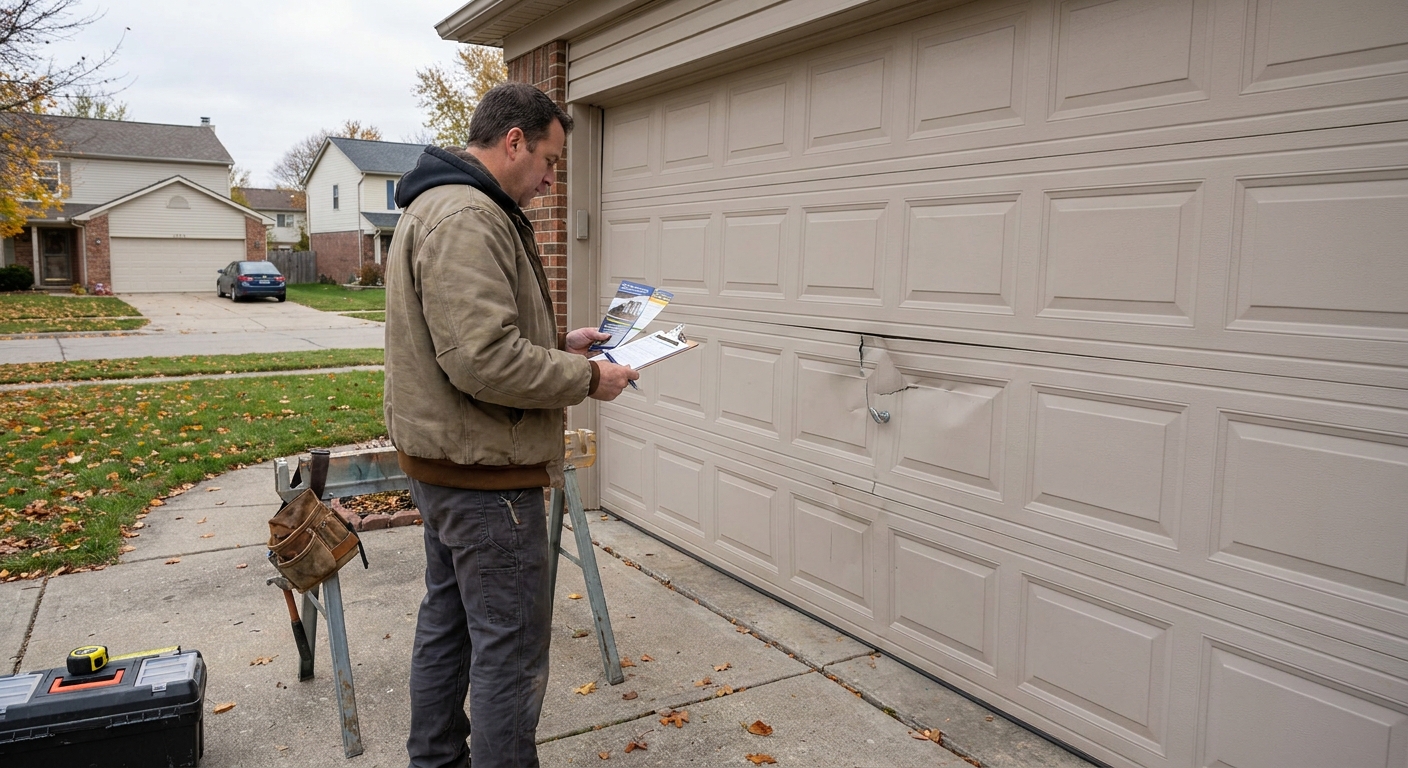
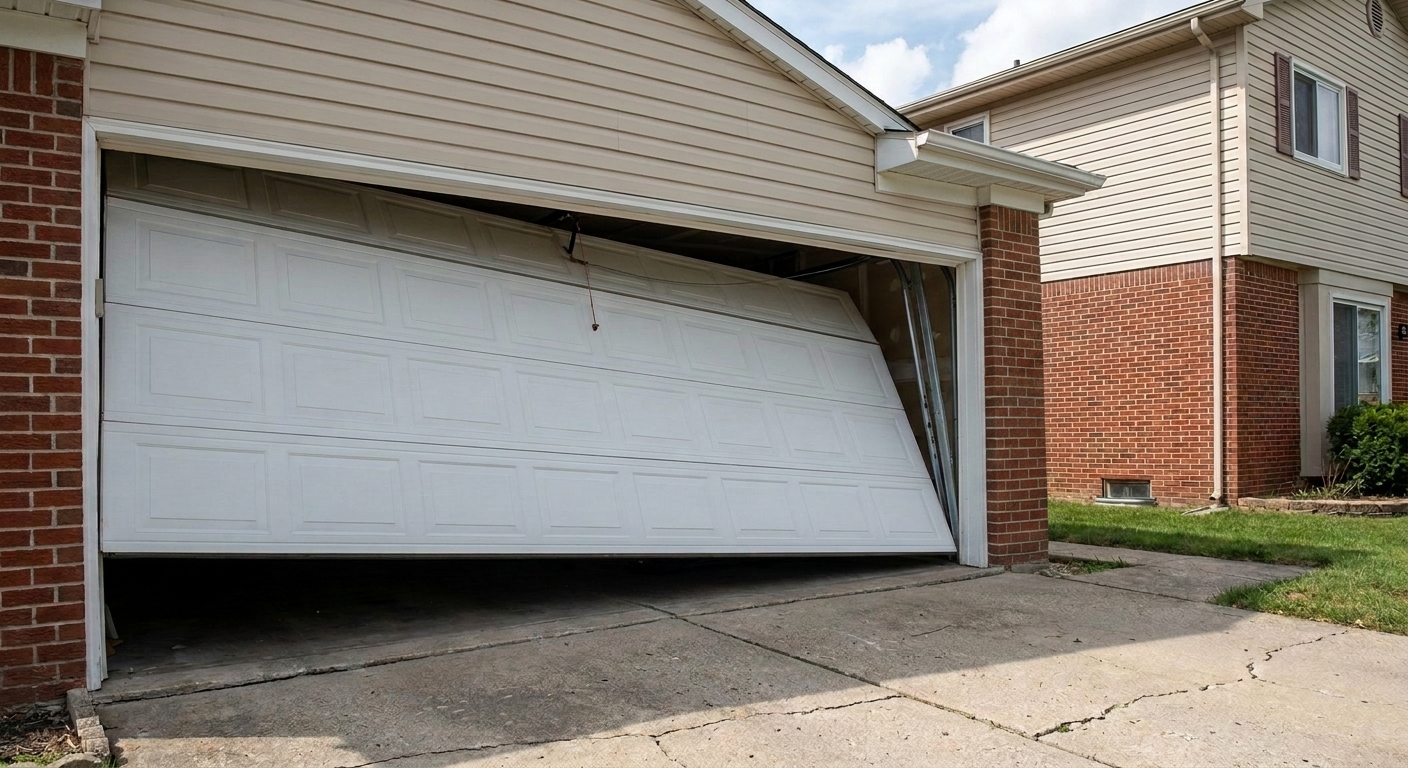
- Panels that are dented, cracked, or sitting at an odd angle
- Rollers that are damaged or have come out of the track
Take photos if you can. It helps the repair crew understand what they're walking into, and it gives you a record if insurance gets involved.
Opener Settings Can Cause Chaos
Sometimes the door itself is fine, but the opener is set to close with too much force or speed. If the force settings are cranked too high, the door can slam shut even when the springs and cables are intact.
This is more common after someone messes with the settings or installs a new opener without proper calibration. If the door's been closing harder than usual or you've noticed it doesn't stop when it should, the opener might be the problem. A tech can adjust the force and travel limits to bring it back in line, especially if you're considering upgrading your garage door motor.
Why DIY Is a Bad Bet Here
Garage door repair isn't like changing a lightbulb. The components are under extreme tension, and one wrong move can lead to serious injury. We've seen people try to wind a spring with a screwdriver or yank a cable back into place — and we've seen the aftermath.
Professional techs have the tools, the training, and the insurance to handle high-tension repairs safely. They also know how to spot secondary issues that might not be obvious to someone who's never worked on a door before. Saving a few bucks isn't worth a trip to the hospital or a door that fails again in a month.
How to Keep It From Happening Again
Once the door's fixed, you're not done. Garage doors need regular attention to stay safe and functional. Most failures don't happen out of nowhere — they're the result of wear that went unnoticed.
- Schedule annual inspections with a qualified technician
- Test the door's balance every few months by disconnecting the opener and lifting it manually
- Listen for grinding, squeaking, or jerky movement when the door operates
- Keep the tracks clean and free of debris or buildup
- Lubricate springs, rollers, and hinges as recommended by the manufacturer
If the door doesn't stay open halfway when you lift it manually, the springs are out of balance. That's a sign they need adjustment or replacement before they fail completely.
What to Tell the Repair Tech
When you call for garage door repair, be specific. Don't just say "the door slammed." Describe what you saw and heard. Did it make a loud bang? Is one side lower than the other? Are there visible broken parts?
The more detail you provide, the better prepared the tech will be. They'll know what parts to bring, what tools to pack, and how long the job might take. That means faster service and less chance of a return trip.
Secure the Door Until Help Arrives
If the door's stuck closed and you need to get in or out, use the manual release to disconnect the opener. Most systems have a red cord hanging from the trolley. Pull it, and you can lift the door by hand — assuming it's safe to do so.
If the door won't budge or feels unstable, don't force it. Use another entrance and wait for the pros. Forcing a damaged door can make the problem worse or cause injury.
When to Involve Insurance
If the door caused property damage — dented a car, broke something in the garage, or damaged the door itself beyond normal wear — document everything. Take photos, save receipts, and file a claim if your policy covers it.
Some homeowners policies include coverage for sudden mechanical failures. Others don't. Either way, having a paper trail helps. And if the door injured someone, you'll want that documentation for liability purposes too.
Maintenance Beats Emergencies Every Time
A door that slams shut is a wake-up call. It's proof that something in the system was already failing, and you just didn't catch it in time. The good news? Most of these failures are preventable.
We recommend treating your garage door like any other major system in your home. Regular checkups, prompt repairs, and attention to signs your garage door needs professional repair keep it running safely. And when something does go wrong, you'll know exactly who to call and what to expect. That's not paranoia — it's just smart homeownership. For residential door services or professional installations, reach out to experienced technicians who understand the complexities of these systems.
Let’s Keep Your Garage Door Safe
We know how important it is to have a garage door you can trust—one that protects your family and your home without surprises. If your door has slammed shut or you’re worried about its safety, let’s take care of it together. Call us at 586-791-2369 to talk with our team, or request a quote and we’ll help you get peace of mind back in your garage.
‹ Back
Recent Posts
-
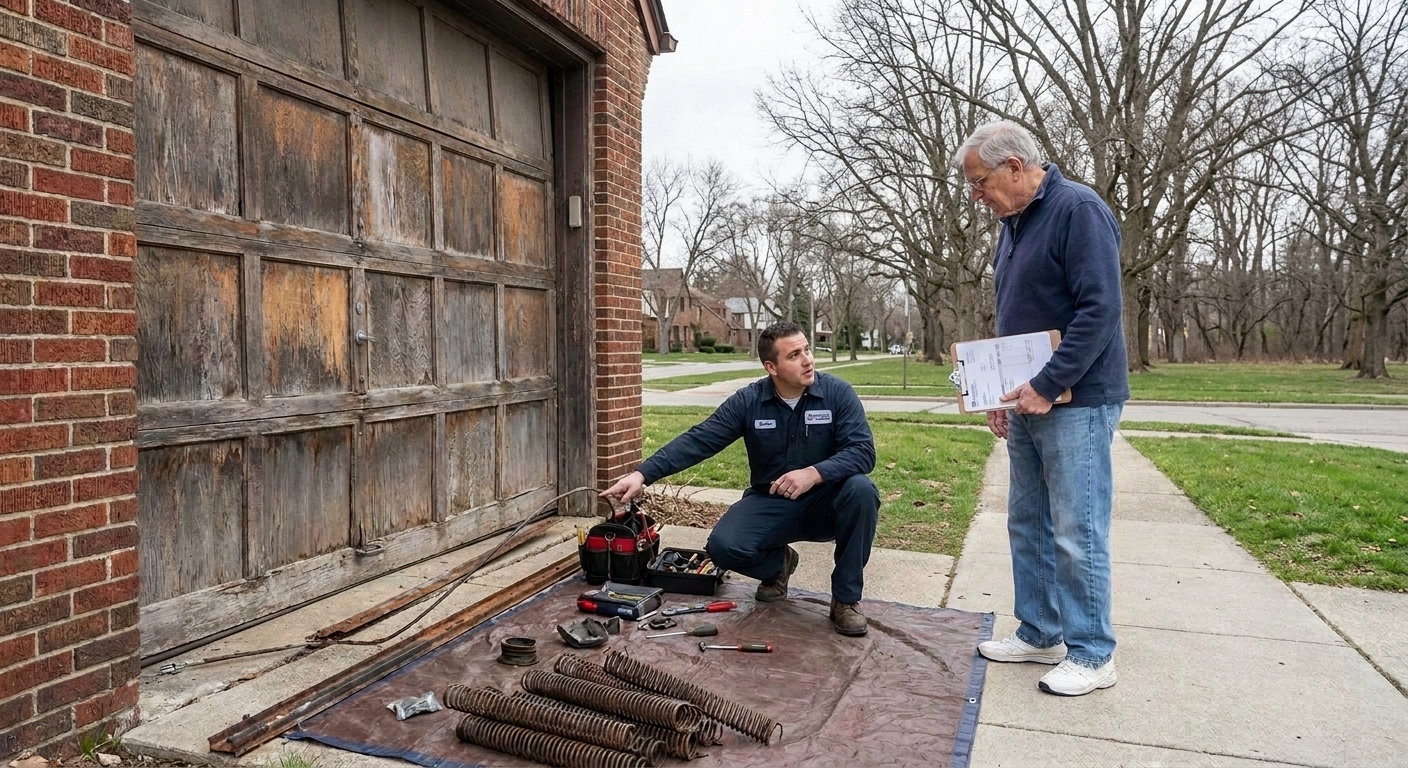
Are Older Garage Doors in Grosse Pointe More Expensive to Maintain?
September 29, 2026
-
Why Is My Garage Door in St. Clair Shores Opening Crooked?
September 15, 2026
-
Can You Replace Just One Garage Door Panel in Clinton Township?
September 1, 2026
-
-