
By using our website, you agree to the use of cookies as described in our Cookie Policy
Why Garage Doors Start to Sag Over Time
Most homeowners think garage doors are just about opening and closing. Up and down. But physics sees more than that — and if you don't, you're asking for repairs. Doors may not show obvious wear at first, but they do leave clues in how they move. Especially if you're ignoring the springs or skipping maintenance.
So here's the reality. If you're relying on that door to protect your home and belongings, that's smart. Just don't treat it like it runs itself. Every component should be inspected. Every sign of trouble needs attention. And every repair decision should be grounded in what's actually failing — not just what looks off from the driveway.
The Weight Problem Nobody Talks About
Garage doors are heavy. Really heavy. A standard two-car door can weigh anywhere from 150 to 400 pounds depending on material and insulation. That mass doesn't just sit there — it pulls, stresses, and tests every hinge, bracket, and spring holding it up.
When the door is new, everything works in harmony. The springs counterbalance the weight. The tracks guide it smoothly. The panels stay aligned. But over months and years, that constant load starts to win. Metal fatigues. Wood warps. Hardware loosens. And gravity? Gravity never takes a day off.
Springs Lose Their Fight
Your garage door springs do the heavy lifting — literally. They're wound tight to offset the door's weight, making it possible to lift hundreds of pounds with minimal effort. But springs have a lifespan, usually measured in cycles. Open and close your door ten times a day, and you're burning through those cycles fast.
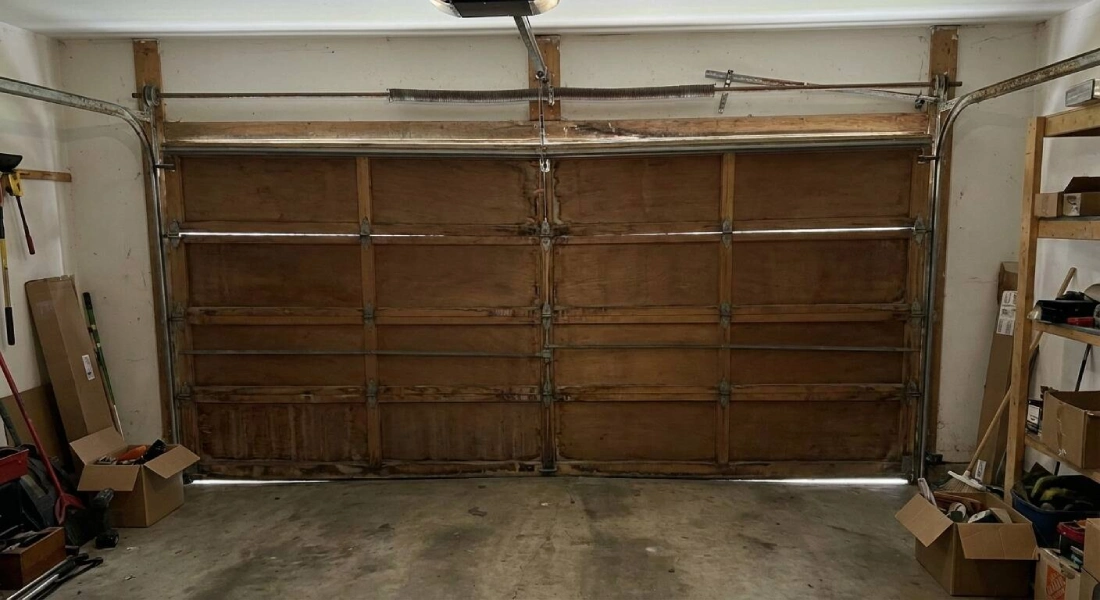
When springs weaken, they can't hold the door's weight evenly anymore. The middle starts to droop. The door struggles to stay level. And if one spring breaks while the other holds? You'll see sagging on one side that's impossible to miss. Most homeowners don't realize their springs are dying until the door won't budge or hangs crooked in the frame.
Hinges Take More Abuse Than You Think
Hinges connect each panel and allow the door to bend as it travels along the tracks. Every time the door moves, those hinges flex, twist, and bear load. Over time, the holes where the screws sit can widen. The metal can crack. Rust can set in if moisture gets trapped.
Loose or damaged hinges let panels shift out of alignment. That's when you start seeing gaps between sections or hear rattling during operation. And once the door loses its rigidity, sagging follows. It's not always dramatic — sometimes it's just a slight bow in the middle. But it's enough to throw off the whole system.
What Happens When Panels Warp
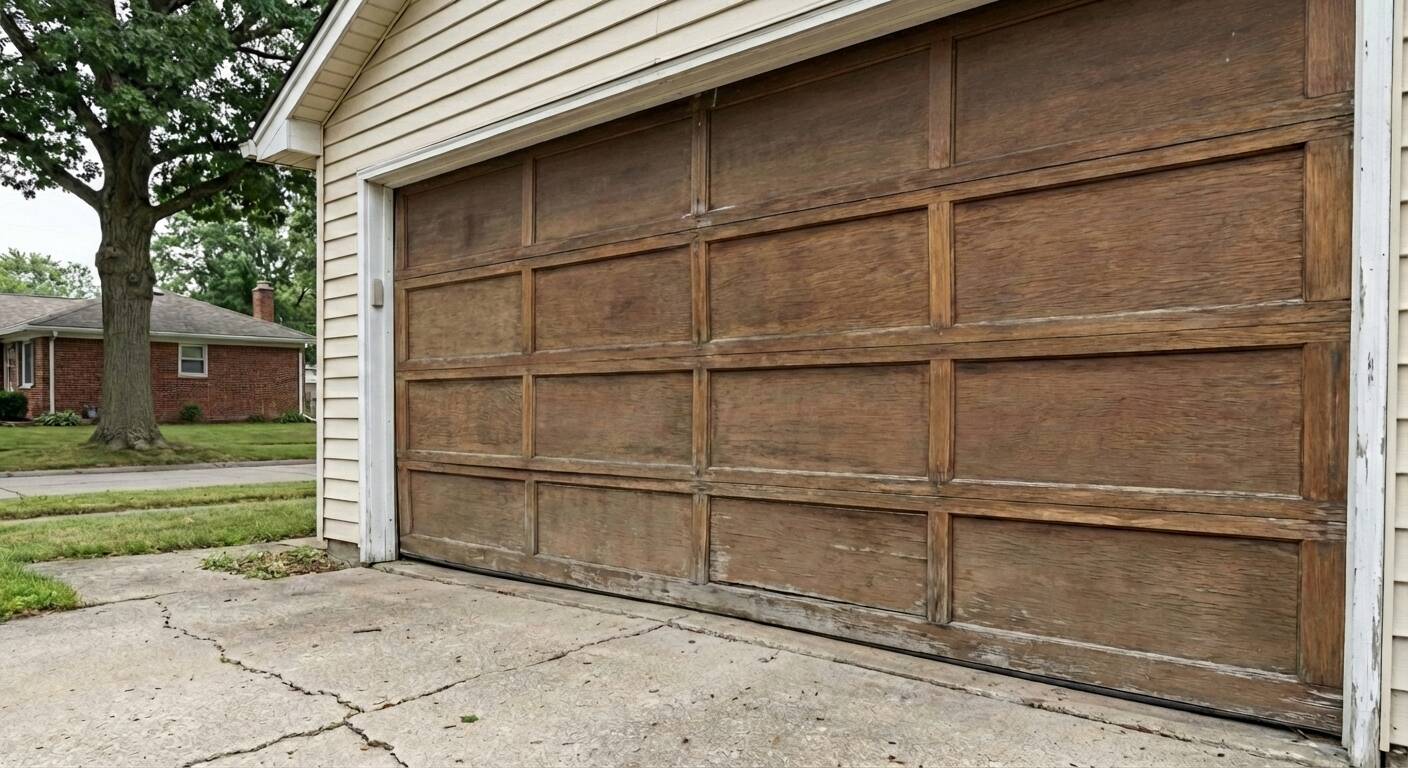
Wood doors look great until they don't. Moisture, temperature swings, and UV exposure all take their toll. Wood expands when it's humid and contracts when it's dry. Do that enough times, and the panels start to warp or twist.
Steel and aluminum aren't immune either. Thin panels can dent or bend, especially if something impacts them. Once a panel loses its shape, it no longer sits flush in the frame. The door may bind in the tracks or sag where the panel has buckled. And if the damage is in the middle? That's where you'll see the most noticeable droop.
Tracks and Rollers Wear Down
The tracks guide your door's path. The rollers glide along those tracks. When both are in good shape, the door moves smoothly and stays level. But tracks can bend from impact or shift from loose mounting brackets. Rollers can crack, flatten, or seize up from lack of lubrication.
When the door can't move evenly, certain sections bear more stress than others. That uneven load accelerates wear and can cause sagging, especially if the door gets stuck partway and hangs there. We've seen doors where one side of the track was so misaligned that the door twisted as it opened. That kind of stress doesn't just cause sagging — it can snap cables or crack panels.
Installation Mistakes Catch Up Eventually
Not every garage door is installed correctly. Maybe the tracks weren't leveled. Maybe the springs were sized wrong for the door's weight. Maybe the brackets weren't secured into studs. Whatever the shortcut, it creates a weak point that time will exploit.
Doors installed without proper support or alignment start showing problems faster. They may sag within a few years instead of a decade. And because the issue is baked into the setup, no amount of tightening or adjusting will fix it. You're looking at a reinstall or major structural correction.
Signs Your Door Is Losing the Battle
Sagging doesn't always announce itself. Sometimes it's subtle. But if you know what to look for, you can catch it early.
- The door hangs unevenly when partially open
- There's a visible bow or dip in the middle panels
- Gaps appear between the door and the frame when closed
- The door drags or binds in the tracks
- You hear scraping or grinding during operation
Any of these symptoms means something's failing. Ignore them, and you're setting yourself up for a breakdown at the worst possible time — usually when you're late for work or it's pouring rain.
How to Stop Sagging Before It Starts
Prevention beats repair every time. A little attention now saves you from expensive fixes later.
- Lubricate hinges, rollers, and tracks every few months
- Tighten loose bolts and screws before they strip out
- Inspect springs for rust, gaps, or uneven tension
- Check that tracks are level and securely mounted
- Seal and paint wood doors to protect against moisture
Most of this takes less than an hour twice a year. It's not glamorous, but it works. And it's a lot cheaper than replacing a door that collapsed because nobody bothered to check the hardware.
When DIY Becomes Dangerous
Garage doors are one of the few home systems where DIY can get you hurt. Springs are under extreme tension. Cables can snap. Panels are heavy and awkward. If you don't know what you're doing, you can lose fingers or worse.
Adjusting springs, replacing cables, or realigning tracks? Call a pro. Lubricating parts, tightening bolts, or cleaning tracks? That's safe territory. Know the difference. There's no shame in hiring someone who does this for a living, especially when the alternative is a trip to the ER.
What Fixing Sagging Actually Involves
The fix depends on what's causing the sag. Worn springs get replaced. Loose hinges get tightened or swapped out. Warped panels might need reinforcement struts or full replacement. Misaligned tracks get adjusted and secured.
In some cases, especially with older doors, the cost of repairs approaches the cost of a new door. That's when you have to weigh whether you're throwing good money after bad. A new door comes with a warranty, updated safety features, and years of trouble-free operation. An old door with a band-aid fix? You're just buying time.
Materials Matter More Than You'd Guess
Not all garage doors age the same. Steel doors with reinforced panels hold up better than thin, uninsulated ones. Composite and vinyl doors resist warping better than wood. Aluminum is lightweight but dents easily.
- Wood doors need regular sealing and are prone to warping
- Steel doors resist sagging but can rust if the finish is damaged
- Aluminum doors are light but lack rigidity without reinforcement
- Composite doors offer durability with minimal maintenance
If you're replacing a door, think about how much maintenance you're willing to do. A beautiful wood door is great until you're repainting it every few years and dealing with rot. A steel door with a good finish? Set it and forget it.
The Real Cost of Waiting
Ignoring a sagging door doesn't make it better. It makes it worse. A door that's slightly out of alignment today can be completely jammed tomorrow. Springs that are weak now can snap without warning. Panels that are bowing can crack under stress.
And when a garage door fails, it's not just an inconvenience. It's a security risk. It's an insulation problem. It's a safety hazard if it falls. The longer you wait, the more expensive and complicated the fix becomes. We've seen doors that could have been saved with a $200 repair end up needing $2,000 replacements because the owner kept putting it off.
Keeping Your Door in the Fight
Garage doors don't last forever, but they can last a long time if you treat them right. Regular maintenance, prompt repairs, and knowing when to call in help — that's the formula. Sagging isn't inevitable. It's just what happens when a door doesn't get the attention it needs.
Your garage door works hard. It cycles thousands of times. It faces weather, impacts, and constant stress. Give it the maintenance it deserves, and it'll keep doing its job without drama. Skip that maintenance, and you'll be dealing with sagging, binding, and eventually a door that won't move at all. If you're experiencing issues with your door, consider reaching out for garage door repair services. For those looking to upgrade or replace their existing system, explore options for professional garage door installations. Whether you need residential door services or commercial door solutions, working with experienced professionals ensures your door operates safely and efficiently. You can also learn more about overhead door systems and how proper installation and maintenance can extend the life of your garage door. The choice is yours, but the physics? Those don't negotiate.
Let’s Keep Your Garage Door Working Its Best
We know how important a reliable garage door is for your daily routine and peace of mind. If you’ve noticed any signs of sagging or just want to make sure your door is in top shape, let’s tackle the problem together before it turns into a bigger headache. Give us a call at 586-791-2369 or request a quote and we’ll help you keep your garage door running smoothly for years to come.
‹ Back
Recent Posts
-
Can a New Garage Door in Clinton Township Help Cut Energy Costs?
October 13, 2026
-
Are Older Garage Doors in Grosse Pointe More Expensive to Maintain?
September 29, 2026
-
Why Is My Garage Door in St. Clair Shores Opening Crooked?
September 15, 2026
-
Can You Replace Just One Garage Door Panel in Clinton Township?
September 1, 2026
-