

By using our website, you agree to the use of cookies as described in our Cookie Policy
Why Is My Garage Door in St. Clair Shores Opening Crooked?
Most homeowners in St. Clair Shores think a crooked garage door is just annoying. An eyesore. A quirk you can live with. But what you're really looking at is a mechanical failure waiting to get worse — and if you ignore it, you're asking for a collapse, a break-in, or a repair bill that could've been avoided. A door that tilts isn't charming. It's compromised. And the longer you wait, the more expensive the fix becomes.
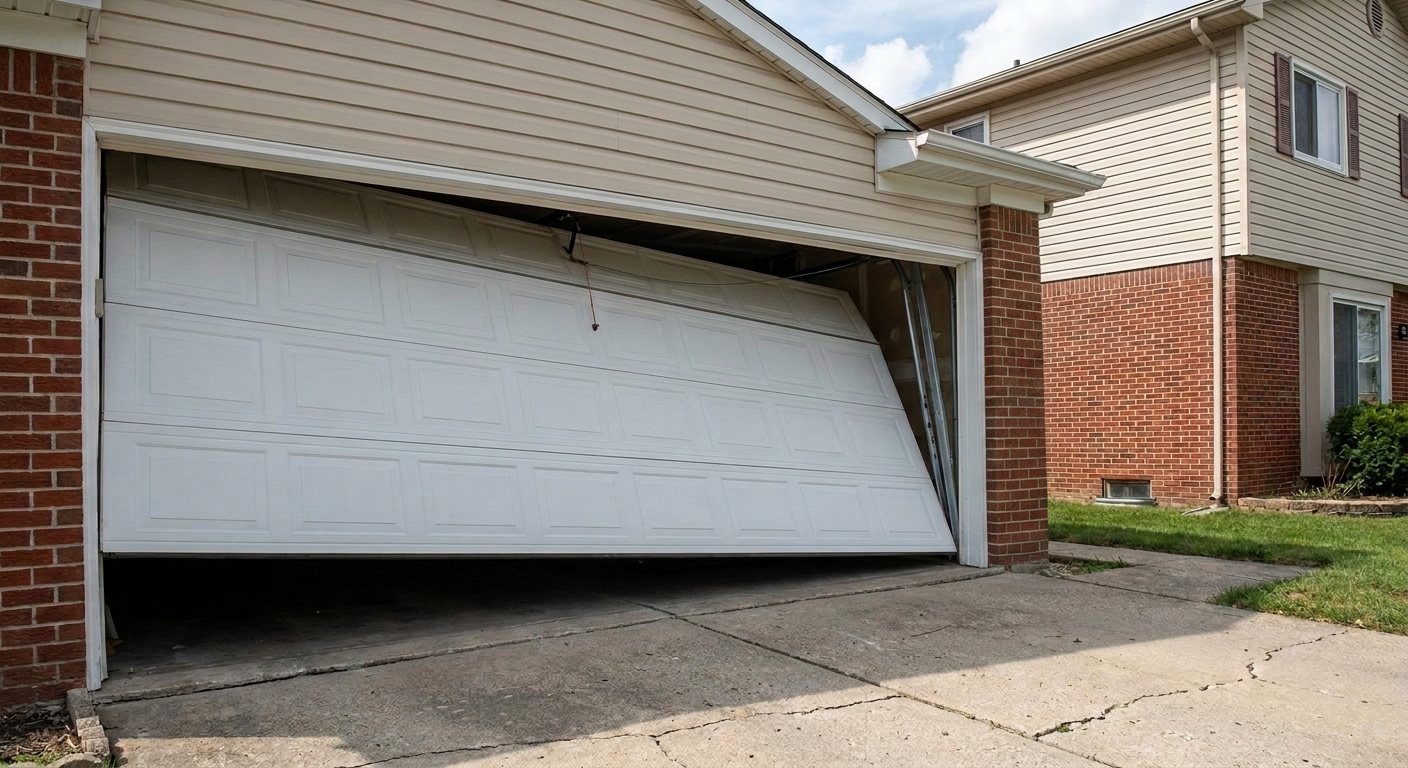
So here's the reality. If your door isn't tracking straight, something has already broken down. Maybe it's a cable under tension. Maybe it's a spring that gave out last winter. Maybe it's a bent track you didn't notice until the tilt got obvious. Either way, every cycle you run that door is grinding metal, stressing components, and edging you closer to a full shutdown. The good news? Most of these issues have a fix. The bad news? None of them fix themselves.
The Usual Suspects Behind a Tilted Door
We've seen this scenario play out hundreds of times. A door starts opening uneven, and the homeowner assumes it's no big deal. Then one morning it won't budge at all. Or worse, it comes off the track while someone's standing underneath. The truth is, crooked movement always has a cause — and most of the time, it's one of these.
Cables snap without warning. Springs lose tension over time. Tracks get knocked out of alignment by a stray hockey stick or a careless bump. Rollers wear down after years of use. And if the door was installed poorly to begin with, you might've been riding on borrowed time from day one. Here's what we're usually dealing with when we show up:
- One cable has frayed or snapped, leaving the opposite side to carry all the weight and pulling the door into a diagonal slant
- The tracks on one or both sides have bent inward, outward, or shifted off their mounts, blocking smooth vertical travel
- A torsion spring above the door or an extension spring along the side has broken, eliminating the counterbalance that keeps the door level
- Debris, ice buildup, or a lodged object is jamming one side of the track and forcing the door to favor the opposite side
- The original installation left the door slightly off-plumb, and years of use have magnified that initial error into a visible tilt
- Rollers have cracked, seized, or fallen out of their housings, causing one side to drag while the other side climbs freely
What Happens When You Let It Ride
Maybe you're thinking it's not that bad. The door still opens. It still closes. You can still get your car in and out. But here's what you're not seeing: every uneven cycle is multiplying stress across the entire system. The opener motor is working overtime. The good cable is carrying double load. The intact spring is stretching beyond its design limit. And the track on the high side is bending a little more each time.
Eventually, something gives. And when it does, you're not just dealing with a crooked door anymore — you're dealing with a door that won't move, a bent frame, or a safety incident. We've pulled doors off cars. We've seen them fall in driveways. We've replaced entire opener systems because a homeowner waited too long. Here's what you're risking if you don't act:
- The door could derail completely, dropping hundreds of pounds of steel and glass onto whatever's below
- Uneven tension accelerates wear on the opener, cables, and springs, turning a small fix into a full system replacement
- A misaligned door won't seal properly, leaving gaps that invite break-ins or let weather and pests inside
- Air leaks around a crooked door waste energy, making your garage colder in winter and hotter in summer
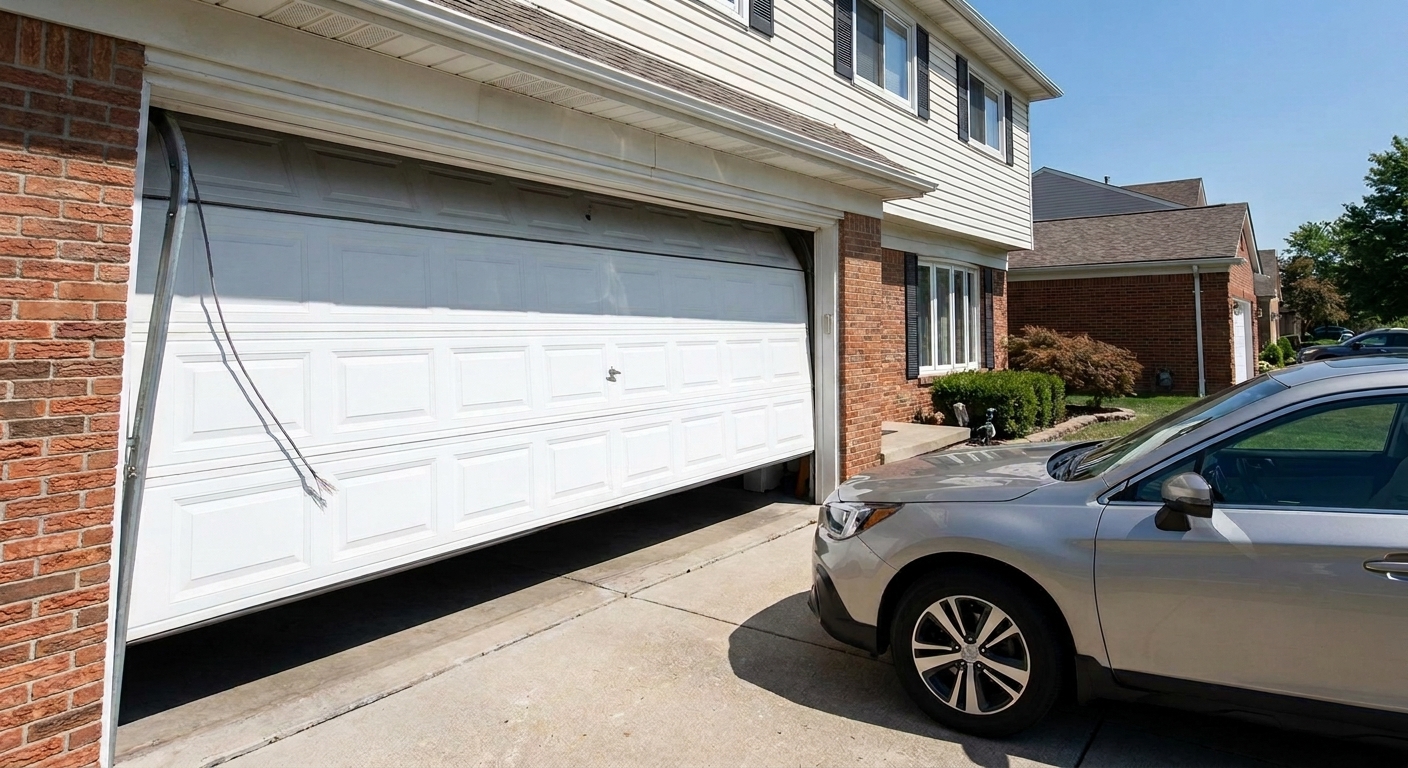
Steps to Take Before It Gets Worse
If your door is tilting, stop using it until you know what's wrong. Running a compromised door only accelerates the damage. The first thing we do is a visual sweep — looking for broken cables, shifted tracks, and worn rollers. If you're comfortable doing that yourself, go ahead. But don't try to adjust springs or cables on your own. Those components are under serious tension, and a slip can cause injury.
The balance test is simple. Disconnect the opener, lift the door halfway by hand, and let go. If it sinks or shoots up, the springs are off. If it stays put, the springs might be fine and the issue is elsewhere. Either way, you'll need a pro to confirm and repair. Here's the smart play:
- Check the tracks for visible bends, obstructions, or loose mounting brackets that could be throwing off alignment
- Inspect the cables for fraying, slack, or detachment from the drum — these are high-tension components that fail without warning
- Look at the rollers for cracks, flat spots, or missing wheels that would cause one side to drag
- Run the balance test to see if the springs are still holding equal tension on both sides
- Call a licensed garage door technician in St. Clair Shores to handle the diagnosis, repairs, and adjustments safely
Regular Maintenance Stops Most of This
We've serviced doors that are twenty years old and still run smooth. We've also replaced systems that failed in under five because no one ever touched them. The difference isn't luck — it's upkeep. A garage door is a machine. It has moving parts, tension components, and metal-on-metal contact. If you don't lubricate, inspect, and adjust it, it will fail. And when it fails, it usually picks the worst possible moment.
Most of the crooked doors we fix could've been prevented with a simple tune-up. Springs get checked for wear. Cables get inspected for fraying. Tracks get cleaned and realigned. Rollers get replaced before they seize. Opener settings get recalibrated. It's not glamorous work, but it's what keeps your door running for decades instead of years. Here's what a solid maintenance routine covers:
- Lubrication of rollers, hinges, springs, and tracks to reduce friction and prevent premature wear
- Inspection of cables and springs for signs of rust, fraying, or loss of tension that could lead to failure
- Alignment check on both tracks to ensure they're parallel, level, and securely mounted to the frame
- Roller replacement if any wheels show cracking, flat spots, or excessive play in their housings
- Opener adjustment to balance lifting force and prevent strain on one side of the door
When DIY Becomes a Liability
We get it — you're handy. You've fixed plenty of things around the house. But garage doors are different. The springs alone can store enough energy to break bones. The cables can snap under load and whip across the garage. The door itself weighs several hundred pounds, and if it falls while you're underneath, it's game over. This isn't a YouTube project. This is a call-a-pro situation.
A qualified technician has the tools, the training, and the insurance to handle high-tension repairs safely. They'll diagnose the root cause, not just the symptom. They'll replace worn parts before they fail. And they'll make sure your door is balanced, aligned, and safe to operate. If your garage door is opening crooked in St. Clair Shores, don't gamble on a DIY fix. The repair might cost a few hundred bucks. The mistake could cost a lot more.
Let’s Get Your Garage Door Back on Track
We know how important it is to have a garage door you can trust—one that opens smoothly every time and keeps your home secure. If you’re dealing with a crooked door or just want peace of mind, let’s tackle the problem together before it turns into something bigger. Give us a call at 586-791-2369 or request a quote and we’ll make sure your garage door is safe, reliable, and ready for whatever comes next.
‹ Back
Recent Posts
-
Why Is My Garage Door in St. Clair Shores Opening Crooked?
September 15, 2026
-
Can You Replace Just One Garage Door Panel in Clinton Township?
September 1, 2026
-
-
-
What Causes Garage Door Cables to Snap in Grosse Pointe?
July 21, 2026